Building a new home comes with a hundred decisions, and new construction wiring is one you really can’t afford to get wrong. It’s not glamorous. Nobody walks through a finished house admiring the panel in the garage. But it’s the thing that decides whether your lights work reliably for the next 30 years or whether you’re calling an electrician every winter because a breaker keeps tripping. Whether you’re looking for a trusted electrician in Abilene or simply want to understand your home’s electrical needs, our helpful guides are created to provide clear, practical information while helping local homeowners find reliable electrical solutions.
In plain terms, this is the wiring, panel, and outlet work that happens while your house is still open framing, before drywall goes up. It’s done in stages; it has to pass inspection, and once the walls close, fixing mistakes gets a lot more expensive than doing it right the first time.
Here’s what actually happens during this process, what it costs, and what to watch out for.
What Does This Process Actually Involve?
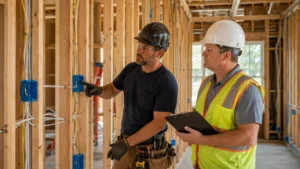
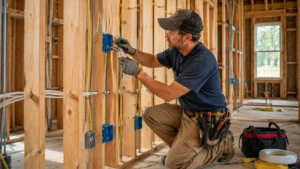
Picture a house mid-build. Studs are up, but there’s no drywall yet. That’s when electricians run wire from room to room, mount the main panel, and rough in the boxes for every outlet, switch, and light fixture in the house.
This is where construction wiring differs a lot from wiring an older, already-finished home. With open framing, an electrician can run wire cleanly, without fishing it through finished walls or patching drywall afterward. That access is a big reason new-build wiring, when done properly, tends to hold up better long term. Once those walls close, changes get expensive fast, so this stage really is the one to get right.
Key Stages of the Wiring Process
Most new builds move through the same general sequence:
- Planning and load calculation. The electrician figures out how many circuits the house needs based on square footage, appliances, and anything extra like an EV charger or a generator down the road.
- Rough-in wiring. Wire gets run through studs, floors, and ceilings before insulation or drywall goes in.
- Panel and breaker installation. The main panel goes in, sized for the home’s total electrical load.
- Outlet, switch, and fixture wiring. Boxes get mounted at every spot where an outlet, switch, or light will eventually go.
- Inspection. A local inspector reviews the rough-in work before anything gets covered up.
- Final trim-out. After walls are finished, the actual outlets, switches, and fixtures get installed and connected.
Most wiring problems trace back to one of these steps being rushed or skipped.
Essential Wiring Components for a New Home
Materials matter here just as much as the labor. A solid new home electrical setup usually includes:
- Romex (NM cable) for most standard circuits, with THHN used in conduit runs
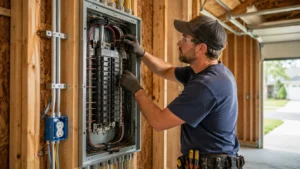
- A panel in the 150 to 200 amp range, which covers most modern household loads
- GFCI and AFCI outlets wherever code requires them, meaning kitchens, bathrooms, garages, and bedrooms
- Pre-wiring for smart switches, cameras, or networking, which more homeowners are asking for upfront
Getting these right the first time, during electrical wiring new home construction, saves you from tearing into walls later for an upgrade.
Electrical Code and Permit Requirements
Every bit of new construction electrical wiring has to meet the National Electrical Code, plus whatever local rules Abilene has on top of that. This isn’t a box to check for the sake of paperwork. It’s what keeps the house from becoming a fire hazard or an insurance headache.
A permit gets pulled before wiring starts. Once the rough-in is done, an inspector comes out and checks it before drywall covers anything up. Skip this step, or rush it, and you risk a failed inspection, a delayed move-in date, or problems that surface years later when you try to sell.
How Long Does It Take?
There’s no single answer here; it really depends on the house. But roughly:
- Homes under 2,500 square feet: about 3 to 5 days for rough-in
- Larger homes, or ones with a lot of smart wiring: closer to 1 to 2 weeks
- Trim-out at the end: usually 2 to 3 days
Circuit count, extras like EV chargers or generators, and how fast the local inspector can schedule a visit all shift these numbers around.
Mistakes We See on New Builds
Even brand-new homes end up with wiring issues, usually the same handful of them:
- A panel sized too small to handle future additions
- Wire gauge that doesn’t match the circuit’s amperage, which is a real fire risk
- Not enough outlets, especially in kitchens or home offices where people always wish they had one more
- Permits or inspections skipped to save a few days
- DIY wiring, which almost always fails code and can void your insurance
If you’re trying to figure out how to wire a new construction house without hitting any of these, the short answer is to bring in a licensed electrician from the start, not after something goes wrong.
Safety Considerations Worth Knowing
Grounding, correctly rated breakers, proper spacing between outlets, none of this is optional, and none of it should be guessed at. It matters even more on homes with complex wiring for new construction; think multiple HVAC zones, EV chargers, whole-home generators. Those systems need real planning up front so circuits don’t end up overloaded down the line.
Why a Licensed Electrician Actually Matters?
Anyone can run a wire from point A to point B. What you’re really paying for is someone who knows the current code inside and out, who’s passed dozens of inspections without a callback, and who calculates loads correctly so your panel isn’t undersized the moment you plug in a second window AC unit. That experience shows up in small ways you might not notice until years later, like an electrician leaving a little extra room in the panel for a future circuit, or routing wire so an addition down the road is easier to tie in. Those are the details that save homeowners real money.
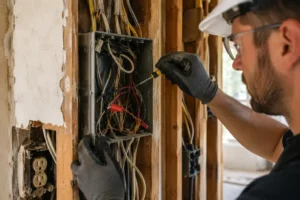
Electrician Abilene, TX: Wiring Done Right for New Homes
If you’re building in the Abilene area, our team at Electrician Abilene, TX handles new construction wiring from the first rough-in to the final trim-out. We’re licensed, insured, and we work directly with builders and homeowners on:
- Full new home wiring and panel installation
- Lighting installation and fixture wiring
- EV charger setup for new builds
- Generator installation and wiring
- 24/7 emergency electrical support, in case something comes up after move-in
We work throughout Abilene, Dyess AFB, Potosi, Clyde, Merkel, Buffalo Gap, Tuscola, and Tye. Same upfront pricing, same code-compliant workmanship, whether it’s a single outlet or the entire wiring package for a new build.
If you’re in the planning stage, give us a call for a free estimate and we’ll walk through your new home construction electrical checklist before rough-in even starts.
What It Actually Costs?
Pricing for wiring a new house comes down to a handful of factors:
- Square footage, since bigger homes need more wire, boxes, and labor hours
- Wire and material type, where copper prices and gauge requirements shift the total
- Labor, which depends on how complex the layout is and how tight the timeline is
- Permit fees, set by the local building department, not the electrician
- Panel size, since anything above 200 amps costs more upfront but pays off if you’re planning ahead
As a rough average, a standard single-family home runs somewhere between $3.50 and $5.50 per square foot for wiring. Add an EV charger, a generator, or heavy smart-home wiring, and that number climbs. An on-site estimate is really the only way to get a number you can trust for your specific build.
Frequently Asked Questions
Q: What’s the difference between rough-in and trim-out?
A: Rough-in is the wire and box installation that happens before drywall. Trim-out is installing the actual outlets, switches, and fixtures once the walls are finished.
Q: How long does the whole wiring process take?
A: Usually 3 days to 2 weeks for rough-in depending on home size, plus another few days for trim-out near the end of the build.
Q: What happens if the wiring doesn’t pass inspection?
A: The build gets delayed until corrections are made. Beyond the schedule hit, it can point to real safety issues that need fixing before anyone moves in.
Q: Who should I hire for new construction wiring in Abilene?
A: Electrician Abilene, TX covers Abilene, Dyess AFB, Potosi, Clyde, Merkel, Buffalo Gap, Tuscola, and Tye with licensed, insured wiring work, upfront pricing, and same-day service when you need it.
Final Thoughts
Good wiring is invisible when it’s done right, and that’s kind of the point. It just works, quietly, for decades. Getting there takes proper planning, code compliance, and someone licensed handling the job from rough-in to trim-out. You can also review Texas electrical licensing information to better understand licensing requirements. We’ll make sure your new construction wiring is done right the first time.