Short answer: a plug that feels slightly warm after a high-power appliance has been running for a while is usually normal. A plug or outlet that is hot to the touch, discolored, buzzing or giving off a burning smell is not normal, and you should stop using that outlet until it has been checked. Heat at an outlet almost always means electricity is meeting resistance somewhere it should not, and resistance turns into heat.
This guide explains how to tell the difference, what usually makes a plug or outlet heat up, and what to do right now if yours does.
Warm vs. Hot: How to Tell the Difference
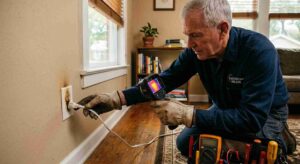
A simple rule of thumb: if you can rest your fingers on the plug or the outlet cover for several seconds without discomfort, it is warm. If you want to pull your hand away, it is hot, and hot is a warning sign.
Usually normal
- The plug of a space heater, hair dryer, window air conditioner or other high-wattage appliance feels a little warm after running for a while.
- A phone or laptop charger feels warm while charging. The charger itself produces some heat, which is different from the wall outlet heating up.
- A dimmer switch feels slightly warm. Dimmers give off a small amount of heat as part of how they work.
Not normal
- The plug or outlet is too hot to hold comfortably.
- The outlet cover plate is warm when nothing is plugged into it.
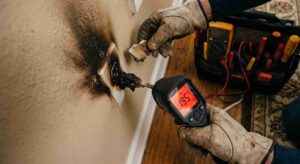
- Brown, black or melted spots on the plug, the outlet face or the cover plate.
- A burning plastic or hot electrical smell near the outlet.
- Buzzing, crackling or popping sounds, or sparks when you plug something in.
- Plugs that fit loosely or slide out of the outlet on their own.
- Lights that dim or flicker when an appliance on that outlet turns on.
What Makes a Plug or Outlet Get Hot?
1. A loose or worn connection
This is the most common cause. Inside every outlet, metal contacts grip the prongs of the plug. After years of plugging and unplugging, those contacts lose their grip. A loose fit means less metal touching metal, more resistance and more heat. The same thing happens when a wire behind the outlet works loose from its terminal screw, or when the outlet was wired through the push-in holes on the back instead of the screws. A plug that wobbles or falls out is a strong hint that the outlet is worn out.
2. Too much load on one outlet or circuit
Some appliances draw a lot of current. A typical 1,500 watt space heater pulls about 12.5 amps at 120 volts, which is most of what a standard 15 amp household circuit is meant to carry for long periods. Add a second appliance on the same circuit, or run everything through a power strip, and the outlet, plug and wiring all heat up. The U.S. Fire Administration advises plugging space heaters directly into a wall outlet, never into an extension cord or power strip.
3. A damaged plug or cord
Bent or corroded prongs, a cracked plug body or a cord that has been pinched under furniture can all create hot spots. If one appliance’s plug gets hot in every outlet you try, the problem is probably the appliance or its cord, not the outlet.
4. The wrong extension cord
A thin, light-duty extension cord running a heavy load heats up along its length and at the plug. Match the cord’s rating to the appliance, and do not use extension cords as permanent wiring.
5. Older wiring or a problem inside the wall
Some homes built in the 1960s and 1970s used aluminum branch wiring, which is more prone to loose, overheating connections at outlets and switches when it is not connected with the right parts. Old outlets, past repairs and connections that were never tightened properly can all show up as a warm cover plate. If more than one outlet on a circuit is warm, or the heat seems to come from the wall rather than the plug, treat it as a wiring problem. Our guide to types of wiring in old houses covers what to look for.
What to Do Right Now
- If you see smoke, flames or melting, leave the room and call 911. Do not try to unplug something that is burning.
- If the plug is very hot, switch off the breaker for that outlet first, then unplug the appliance. That way you are not handling a hot plug while current is still flowing.
- Stop using the outlet. Put tape over it or leave a note so nobody else plugs something back in.
- Look, but do not open it up. Check the plug and the outlet face for discoloration or melting, and note which appliance was plugged in and for how long. That helps an electrician find the cause faster.
- Rule out the appliance. If the appliance’s plug gets hot in more than one outlet, stop using the appliance and replace or repair it.
- Have a licensed electrician check the outlet and circuit, especially if the cover plate was warm with nothing plugged in, or if you noticed a burning smell.
Please do not pull the outlet out of the wall to have a look while the power is on. The problems that cause heat, like loose or damaged wires, are the same ones that can give you a shock.
What an Electrician Will Usually Do
In most cases the fix is not complicated. A worn outlet is replaced with a new, properly rated receptacle, and the wires are connected under the terminal screws instead of the push-in holes. Loose connections are tightened, and heat-damaged wire ends are trimmed back to clean conductor. If the circuit is overloaded, the answer may be moving a heavy appliance to a different circuit or adding a dedicated circuit for it. When the heat points to a bigger problem, such as aluminum wiring or a failing breaker, the electrician should explain the options before doing any larger work.
If the same breaker also keeps shutting off, read why a breaker keeps tripping, since the two problems often share a cause. And if you notice a smell you cannot place, our guide on what an electrical fire smells like will help you judge how urgent it is.
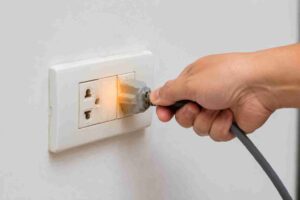
How to Keep Outlets From Overheating
- Plug high-wattage appliances, especially space heaters, straight into a wall outlet.
- Avoid running several heat-producing appliances on the same circuit at the same time.
- Replace outlets that no longer hold a plug firmly.
- Do not use power strips or extension cords as permanent wiring.
- Replace appliances with damaged cords or plugs instead of taping them up.
- Pay attention to small changes, like a faint smell or a cover plate that feels warm, and have them checked early.
The National Fire Protection Association has more general electrical safety tips for the home.
Frequently Asked Questions
Is it dangerous if a plug gets warm?
Slight warmth on the plug of a high-power appliance that has been running for a while is usually normal. A plug that is hot to the touch, discolored or smells like burning plastic is a warning sign, and the outlet should not be used until it is checked.
Why is my outlet warm when nothing is plugged in?
That points to a problem inside the outlet box, such as a loose wire connection, or to heavy current passing through that outlet on its way to other outlets on the same circuit. Either way, it should be looked at by an electrician.
Is it normal for a space heater plug to get hot?
A little warmth can be normal because space heaters draw a lot of current. If the plug gets hot, the outlet is often worn or the circuit is overloaded. Stop using that outlet, and plug the heater directly into a wall outlet that is not sharing a circuit with other large loads.
Can a warm outlet cause a fire?
It can. Heat at an outlet usually comes from resistance at a loose or damaged connection, and over time that heat can damage wire insulation and the materials around the outlet. That is why a hot or discolored outlet should be treated as a safety issue, not a nuisance.
Can I replace a hot outlet myself?
Replacing an outlet looks simple, but the reason it overheated is often a loose or damaged wire that also needs fixing. Unless you are trained and the power is off at the breaker, it is safer to have an electrician handle it.
Need a Warm Outlet Checked in Abilene?
If you are in Abilene or one of the nearby towns we serve, call (325) 326-5306 and describe what you are seeing. We handle outlet and switch repair and can check the circuit behind the outlet. If there is smoke, or a burning smell that keeps getting stronger, call 911 first.