
Short answer: yes, light switches go bad. A switch is a small mechanical device with a spring and metal contacts, and every time you flip it those parts move, carry current and wear a little. Most switches last for decades, but heavy use, loose wiring and cheap parts can make one fail much sooner. A switch that is warm, buzzing, sparking or smells like burning plastic should be treated as a safety problem, not an annoyance.
This guide covers how long a light switch usually lasts, the signs that one is going bad, how to tell whether the problem is the switch or something else, and when it is time to call an electrician.
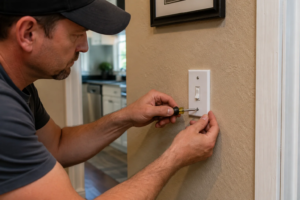
How Long Does a Light Switch Last?
There is no fixed expiry date, but a standard wall switch is built to last a long time. InterNACHI, the home inspectors’ association, lists lighting controls at 30 years or more in its estimated life expectancy chart. Treat that as a rough guide rather than a promise. How long a particular switch lasts depends on:
- How often it is used. A hallway or kitchen switch that gets flipped dozens of times a day wears out long before one in a spare bedroom.
- How it was connected. Wires held under the side terminal screws stay tight. Wires pushed into the quick-connect holes on the back of cheaper switches are more likely to work loose over time.
- The load it controls. A switch that runs a heavy load, such as several fixtures or a large fan, works harder than one that turns on a single LED bulb.
- The type of switch. Dimmers, timers, motion sensors and smart switches contain electronics, and electronics can fail in ways a simple toggle switch does not.
- The wiring behind it. Older or aluminum branch wiring puts extra stress on connections at switches and outlets (more on that below).
Why Do Light Switches Go Bad?
Inside a switch, a spring snaps a pair of metal contacts together or pulls them apart. Each time the contacts open or close under load, a tiny arc forms between them, and over thousands of cycles that slowly pits and roughens the metal. Rough contacts touch less surface, which means more resistance and more heat. At the same time the spring weakens, so the switch loses its crisp click. Add a terminal screw that has loosened over the years, and you have the usual recipe for a failing switch.
7 Signs a Light Switch Is Going Bad
- The light flickers when you touch or wiggle the switch. That points to worn contacts or a loose wire at the switch.
- The switch feels loose, mushy or does not click. A toggle that no longer snaps cleanly into position, or that stops halfway, has a worn mechanism.
- The light works only some of the time. If a known good bulb comes on one day and not the next, the switch or a connection is a likely cause.
- The cover plate feels warm. A dimmer can feel slightly warm in normal use. A standard on/off switch should not.
- Buzzing or crackling from the switch. A faint hum from some dimmers can be normal. Crackling or sizzling from a regular switch usually means current is jumping across a poor connection.
- Sparks or popping you can see or hear. A very small, brief flash inside the switch as you turn it off can happen as the contacts separate. A loud pop, sparks around the cover plate or repeated flashing are not normal.
- A burning smell, scorch marks or a discolored cover plate. Turn the circuit off at the breaker and do not use that switch again until it has been checked.
If you notice one of the first three signs, the switch is probably just worn out. If you notice any of the last four, treat it as a heat problem and act sooner rather than later. Our guide to what an electrical fire smells like can help you judge how urgent a smell is.

How to Tell If It Is the Switch, the Bulb or the Fixture
A light that will not come on is not always a bad switch. Work through the easy checks first. None of these steps involve opening the switch box.
- Try a bulb you know works. Burned-out and loose bulbs are the most common reason a light stays off.
- Check the breaker and any GFCI outlets. A tripped breaker or GFCI can kill a light circuit, and the reset button is sometimes in another room or the garage.
- Check for a second switch. Lights at the top and bottom of stairs, or at two ends of a hallway, are often controlled by a pair of three-way switches. Either one can be the faulty one.
- Look at other lights on the same circuit. If several lights or outlets stopped working at once, the problem is more likely a loose connection somewhere on the circuit than one bad switch.
- Consider the bulb type on a dimmer. If the light flickers only on low settings, the dimmer and the LED bulbs may not be compatible. Our flickering lights guide explains how to check.
If the bulb, breaker and fixture all check out and the light still misbehaves, the switch or the wiring connected to it is the likely cause.
Is a Bad Light Switch Dangerous?
A switch that has simply stopped working is mostly an inconvenience. A switch that is getting hot is a different matter. Heat at a switch usually comes from resistance at worn contacts or a loose connection, and over time that heat can damage wire insulation and the materials around the box.
Older homes deserve extra attention. According to the U.S. Consumer Product Safety Commission, aluminum branch circuit wiring was installed in some homes between 1965 and the mid 1970s, and connections with aluminum wire, including at switches and receptacles, can overheat. The warning signs CPSC lists include hot-to-the-touch cover plates on switches or receptacles, flickering lights, circuits that do not work and the smell of burning plastic. CPSC also notes that failing aluminum connections often give no warning at all, so if your home was built in that period and you are not sure what kind of wiring it has, it is worth having it checked. Our guide to types of wiring in old houses explains what to look for.
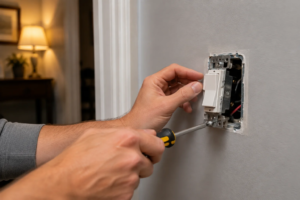
What to Do If a Switch Is Failing
- If you see smoke or flames, leave and call 911.
- If the switch is hot, sparking or smells like it is burning, switch off the breaker for that circuit and leave it off.
- Stop using the switch. Tape it in the off position or leave a note so nobody flips it.
- Do not pull the switch out of the box while the power is on. The same loose or damaged wires that cause heat can also cause a shock.
- Have it replaced, and have the connections checked. A new switch fixes worn contacts, but if the wires behind it are loose, scorched or aluminum, the connections need attention too.
Replacing a Light Switch: DIY or Electrician?
Swapping a basic switch is one of the simpler electrical jobs, which is why many people try it themselves. Texas law does have a limited exemption that lets a person do electrical work in a home they own and live in, but only for work that is not specifically regulated by a local ordinance, so check your city’s rules first. Renters should always go through the landlord.
Even when DIY is allowed, a switch replacement is worth handing to an electrician if:
- the old switch showed heat damage, scorch marks or melted plastic;
- the wiring is aluminum, cloth covered or otherwise old;
- it is a three-way, four-way, dimmer or smart switch and the wiring does not match the instructions;
- there is no neutral wire in the box and the new switch needs one;
- more than one switch or outlet on the circuit is acting up.
An electrician will replace the switch with one rated for the load, connect the wires under the terminal screws, tighten or repair loose connections, and check whether the problem goes beyond the switch itself.
Frequently Asked Questions
Do light switches go bad over time?
Yes. The spring and contacts inside a switch wear with use, and the terminal connections can loosen over the years. Most switches last for decades, but frequent use, heavy loads and loose wiring shorten that.
How often do light switches go bad?
Not often. A standard switch usually lasts for decades, and InterNACHI’s life expectancy chart lists lighting controls at 30 years or more. Switches in high-traffic spots, dimmers and smart switches tend to fail sooner.
Can a bad light switch cause a fire?
It can. A worn or loose switch connection creates resistance, and resistance creates heat. A switch that is warm, sparking, crackling or discolored should be turned off at the breaker and checked.
Why does my light switch buzz?
Some dimmers hum quietly in normal use, especially with bulbs they were not designed for. A regular on/off switch that buzzes or crackles usually has worn contacts or a loose wire, and should be checked.
Is it normal for a light switch to be warm?
A dimmer can feel slightly warm because it gives off a little heat as it works. A standard switch or cover plate that feels warm is not normal.
Can a light switch go bad without warning?
Yes. Sometimes a switch simply stops working one day. That is one reason to take small early signs, like flickering or a mushy feel, seriously when you notice them.
Need a Light Switch Checked in Abilene?
If you are in Abilene or one of the nearby towns we serve, call (325) 326-5306 and describe what the switch is doing. We handle outlet and switch repair and can check the circuit behind it. If a switch or outlet is also warm, read is it dangerous if a plug gets warm. If there is smoke or a burning smell that keeps getting stronger, call 911 first.