
The short answer: plug a space heater straight into a wall outlet, never into a power strip or extension cord, keep it at least three feet from anything that can burn, and turn it off when you leave the room or go to bed. Those rules matter. The U.S. Consumer Product Safety Commission counts an average of 1,600 fires, 70 deaths and 150 injuries a year from portable heaters, based on 2020 to 2022 data (CPSC, January 2026).
This guide covers the electrical side: why space heaters are so hard on outlets and circuits, how to plug one in safely, and the warning signs that mean it is time to call an electrician. When a cold snap hits Abilene, a lot of homes run heaters at the same time. The National Fire Protection Association says the peak months for home heating fires are December, January and February (NFPA).
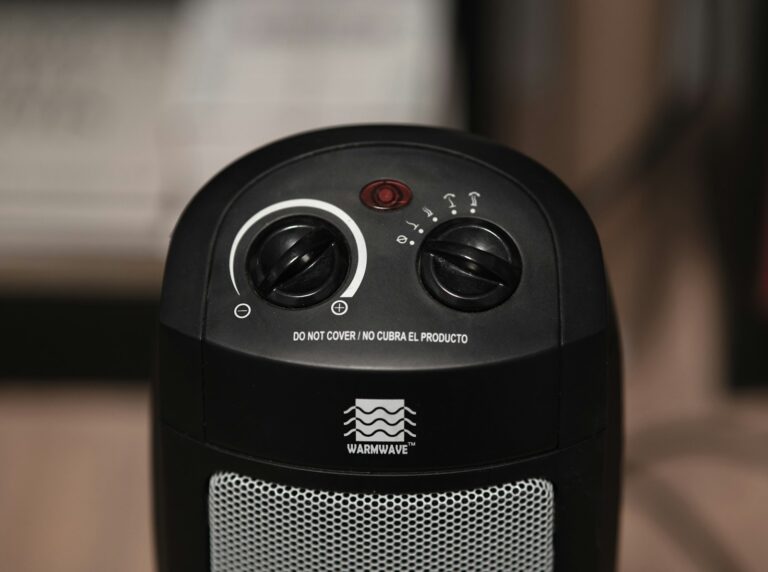
Why Space Heaters Are Hard on Your Wiring
Most electric space heaters run at up to 1,500 watts on high. At 120 volts, that is about 12.5 amps (1,500 divided by 120). Few things in a home pull that much current for that long. A lamp or a phone charger uses a tiny fraction of it.
Bedrooms and living rooms are often on 15-amp circuits, and one circuit usually feeds several outlets, sometimes in more than one room. A heater at 12.5 amps leaves very little room for anything else on that circuit. Add a hair dryer, a vacuum or a second heater and the breaker trips. That trip is the breaker doing its job. Our guide to why a breaker keeps tripping explains overloads in more detail.
The bigger risk is heat at connections. A heater runs for hours. If the outlet is worn, the plug fits loosely, or a wire is loose behind the outlet, that connection heats up. That is why a warm plug or outlet is a warning sign, not a quirk. See is it dangerous if a plug gets warm.
How to Plug In a Space Heater Safely
- Use a wall outlet directly. CPSC and the Texas State Fire Marshal’s Office both say to plug space heaters straight into a wall outlet and not to use extension cords or power strips (Texas Department of Insurance). A power strip or light extension cord is not built for that load and can overheat.
- Check the fit. The plug should go in firmly. If it falls out or wiggles, the outlet is worn. Use a different outlet and have the loose one replaced.
- Give the heater its own outlet. Do not run another high-wattage appliance from the same outlet, and try not to share the circuit with one.
- Inspect the cord and plug first. The Electrical Safety Foundation advises checking for cracked or broken plugs and loose connections before each use, and not using a heater with a frayed or damaged cord (ESFI).
- Keep the cord out in the open. Do not pinch it under furniture or bury it under a rug, where heat cannot escape and damage is hard to see.
Where to Put It and What to Look For
- Three feet of clearance. Keep the heater at least three feet from curtains, bedding, furniture, clothes and paper. The Texas State Fire Marshal’s Office notes that most home heating deaths happened because a space heater was too close to something that burns.
- A level floor. ESFI says to set heaters on a flat, level surface, not on tables, cabinets, furniture or carpet.
- Tip-over shutoff. The Texas State Fire Marshal’s Office suggests models that shut off automatically when tipped over.
- A testing lab label. ESFI says to make sure the heater carries a label showing it is listed by a recognized testing laboratory.
- Turn it off when you leave or sleep. Both CPSC and the State Fire Marshal’s Office say to turn heaters off before you go to bed, and the Fire Marshal adds before you leave the room.
- Working smoke alarms. ESFI recommends smoke alarms on every floor and outside all sleeping areas, tested once a month. If one starts chirping, see why a smoke detector chirps and how to stop it.
Warning Signs: What They Mean and What to Do
| What you notice | What it usually means | What to do |
|---|---|---|
| The breaker trips when the heater runs | Too much load on that circuit | Move the heater to an outlet on a different circuit, or use it on a lower setting. If it keeps happening, have the circuit looked at. |
| The plug or outlet feels warm or hot | A worn outlet or a loose connection heating up | Stop using that outlet. Have an electrician replace it and check the wiring behind it. |
| The plug or outlet is discolored, brown or melted | Overheating has already happened | Turn off the breaker for that circuit and call an electrician. Do not use it again until it is repaired. |
| Lights dim or flicker when the heater kicks on | A heavy load on a shared circuit, or a loose connection | Normal dimming on start-up can be minor, but flicker that keeps going needs a check. See how to fix flickering lights. |
| A burning or fishy smell near the outlet | Overheating plastic or insulation | Unplug the heater if it is safe, turn off the breaker, and call. If you see smoke or flames, get out and call 911. See what an electrical fire smells like. |
When a Dedicated Circuit or a Built-In Heater Makes Sense
If you run a space heater in the same spot every winter, like a cold back bedroom, a garage or a shop, a portable heater on a shared circuit is a weak setup. An electrician can add a dedicated circuit and a new outlet for that spot, so the heater no longer competes with everything else on the circuit. In some rooms, a hardwired wall heater on its own circuit is the cleaner fix. We handle both as part of our electrical installation work, and we can check whether your panel has room for a new circuit or needs an upgrade.
Space Heaters During a Winter Outage
An electric space heater will not run during a power outage unless you have backup power, and running one from a portable generator takes care. Never back-feed a house through a wall outlet, and keep generators outdoors and away from windows. Our power outage and storm electrical safety checklist covers generators, carbon monoxide and local utility outage numbers.
Frequently Asked Questions
Can I plug a space heater into a power strip?
No. CPSC and the Texas State Fire Marshal’s Office both say to plug space heaters directly into a wall outlet and not to use power strips or extension cords. A power strip is not built to carry a heater’s load for hours.
Why does my space heater keep tripping the breaker?
A heater on high pulls about 12.5 amps, which is most of what a 15-amp circuit can carry. If anything else on that circuit is running, the total goes over the limit and the breaker trips. Try an outlet on a different circuit. If the breaker trips even with the heater alone, have the circuit checked.
Is it normal for a space heater plug to get warm?
A plug that feels hot, or an outlet that is warm, is a sign of a worn outlet or a loose connection. Stop using that outlet and have it checked. Our outlet and switch repair page explains what we look for.
Is it safe to leave a space heater on overnight?
No. CPSC advises turning portable heaters off before you go to sleep, and the Texas State Fire Marshal’s Office says to turn them off when you leave the room or go to bed.
Need an Outlet or Circuit Checked?
If a heater keeps tripping a breaker, or an outlet gets warm, call (325) 326-5306. We work in Abilene and the nearby towns, including Dyess AFB, Tye, Merkel, Clyde, Potosi, Buffalo Gap and Tuscola. For anything urgent, see our emergency electrician page.