
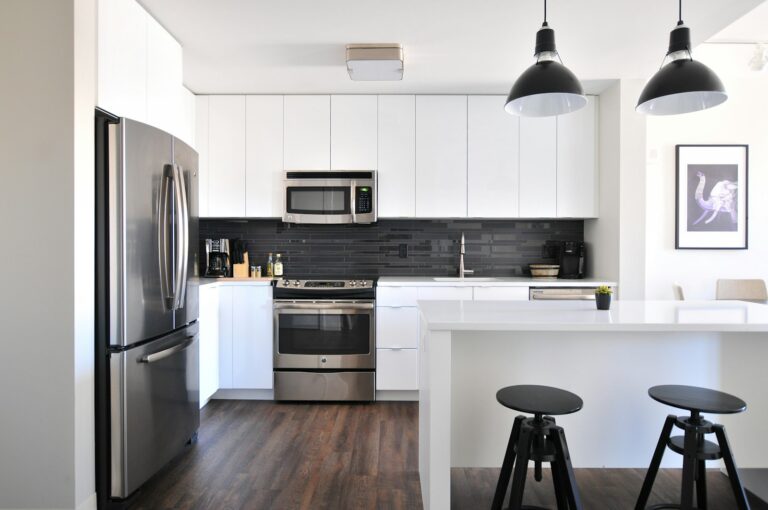
The short answer: a dedicated circuit is a circuit with its own breaker that feeds one appliance and nothing else. No other outlets or lights share it, so that appliance never competes with anything for power. Electric dryers, electric ranges, over-the-range microwaves and dishwashers are the usual examples, and the installation manual for your model is the best place to confirm it. Electricians say “dedicated.” The National Electrical Code says “individual branch circuit,” meaning a branch circuit that supplies only one piece of equipment (ExpertCE).
This guide covers which appliances need one, what is actually required, how to check your home, and what adding a circuit involves in Abilene.
What Is a Dedicated Circuit?
Most of your home runs on shared circuits. One breaker feeds a group of outlets and lights, and everything on it draws from the same limit. A dedicated circuit is one breaker, one run of cable and one appliance. The outlet at the end of it, if there is one, is called a dedicated outlet. The difference is in the wiring, not the outlet.
The limit is simple math: amps times volts equals watts. A 15-amp, 120-volt circuit tops out at 1,800 watts, and a 20-amp circuit at 2,400 watts. For loads that run three hours or more, a standard breaker should only be loaded to 80 percent of its rating (SlashGear, July 2026). That works out to 12 amps, or 1,440 watts, on a 15-amp circuit. A 1,500-watt space heater pulls about 12.5 amps by itself, so there is not much room left for anything else on that circuit.
That is why big loads get their own circuit. Angi lists frequent trips when you turn on a major appliance as a sign you may need one (Angi). If that sounds familiar, start with our guide on why a breaker keeps tripping.
Which Appliances Need a Dedicated Circuit?
The code has no single master list (ExpertCE). This table shows what manufacturers’ own documents say. Each document covers specific models, so check the one for yours.
| Appliance | Typical circuit | What the source says |
|---|---|---|
| Electric dryer | 240 volts, 30 amps | Whirlpool: a separate 30-amp circuit, connected to an individual branch circuit |
| Electric range | 240 volts, 40 amps minimum | GE: an individual, properly grounded branch circuit |
| Over-the-range microwave | 120 volts, 15 or 20 amps | GE: should always be on a dedicated circuit |
| Dishwasher | 120 volts, 15 or 20 amps | GE: an individual branch circuit on one model, and listed as recommended on a dishwasher drawer |
| Refrigerator | 115 volts, 15 or 20 amps | Whirlpool: a separate circuit serving only the refrigerator is recommended |
| Washer | 120 volts, 15 or 20 amps | Whirlpool: a separate circuit serving only the washer is recommended |
| Gas dryer | 120 volts, 15 or 20 amps | Maytag: a separate circuit serving only the dryer is recommended |
| EV wall charger | 240 volts, breaker up to 60 amps | Tesla: a 60-amp breaker gives 48 amps of output, and when several units are installed each needs its own branch circuit |
| Central heating and air conditioning | Sized to the equipment | ExpertCE: the code calls for an individual branch circuit for central heating, and air conditioning rules effectively lead to one |
Angi’s list also includes freezers, garbage disposals, water pumps and hot tubs. See also our guides on EV charger installation cost and the 50 amp RV outlet.
Is It Required or Just Recommended?
Some guides say the code requires a dedicated circuit for every major appliance. The real picture is more mixed. ExpertCE’s guide for electricians says that for many appliances the requirement comes from load calculations, manufacturer instructions or best practice rather than one direct code rule.
- Treat as required: anything whose manual says individual or dedicated circuit, such as the electric dryer and range above, plus central heating.
- Recommended: refrigerators and washers. ExpertCE says the code does not explicitly require a dedicated refrigerator circuit in most homes and permits a shared kitchen circuit, but calls a dedicated one a widely recognized best practice (ExpertCE).
- Shared by design: kitchen counters get at least two 20-amp small appliance circuits, and laundry rooms and bathrooms get a 20-amp circuit for their outlets (Voltflow). Those serve a room or area, not one appliance.
Texas adopted the 2026 NEC as the state electrical code, effective September 1, 2026 (TDLR). The ExpertCE guides are based on the 2023 edition, so ask your electrician to confirm the details under the current code.
Signs You Need a Dedicated Circuit
The Electrical Safety Foundation says many older homes “simply can’t handle the demands of today’s electrical appliances and devices” and advises having a qualified electrician install new circuits for high-energy use devices (ESFI).
| What you notice | What it may mean | What to do |
|---|---|---|
| A breaker trips when one appliance starts | Too much load on a shared circuit, or a faulty breaker | Turn off the other loads and reset the breaker once. If it trips again, call an electrician. |
| Lights dim when something else turns on | ESFI lists this as a sign of an overloaded system | Note which appliance causes it and have the circuit checked. |
| A discolored outlet | Also on ESFI’s list, and a sign of heat | Stop using it and call an electrician. See is it dangerous if a plug gets warm. |
| A major appliance on an extension cord or power strip | NFPA says major appliances should plug directly into a wall outlet | Unplug the cord and ask about a closer outlet or a new circuit. |
| A burning smell at the panel | Angi lists this as a warning sign | Do not touch the panel. If you see smoke or flames, get out and call 911. See what an electrical fire smells like. |
The NFPA tip sheet also says to use only one heat-producing appliance, such as a coffee maker, toaster or space heater, in an outlet at a time (NFPA tip sheet).
How to Check If a Circuit Is Dedicated
You can test this yourself without removing any covers.
- Read the panel labels. Most modern panels show which appliance or area each breaker serves (Angi). Old labels can be wrong, so treat them as a starting point.
- Turn that breaker off. Switch off the appliance first, then flip only that breaker to OFF. Leave the panel cover on.
- Walk the house. Check the lights and test nearby outlets with a lamp or phone charger. Anything else that lost power shares the circuit.
- Turn it back on and label it. ESFI suggests labeling your breakers.
If only that appliance lost power, the circuit is dedicated. If anything else went dark, it is shared. Anything behind the panel cover is a job for a licensed electrician.
Adding a Dedicated Circuit in Abilene: Permits and Cost
Angi calls this an advanced project best left to a licensed electrician. The electrician confirms the panel has room and capacity, matches the breaker and wire to the appliance, runs the cable and installs the outlet. If the panel is full or undersized, a panel upgrade may have to come first.
Permits. The City of Abilene says a permit is required to install, alter or repair electrical systems. A homeowner can pull a permit for their own house only after providing proof of homestead, passing a homeowner’s electrical test given by a City electrical inspector, and submitting the details of the work. Starting without a permit is a code violation and can bring a Stop Work Order and an investigation fee (City of Abilene FAQ). Building Inspections is at 325-676-6273. Outside city limits, check with that town or county.
Cost. Angi puts the national average at $700, with most homeowners paying $570 to $1,000 depending on circuit type, labor rates and complexity. It adds that an electrical inspection can run $100 to $400 and that drywall repair is a separate cost (Angi, updated October 30, 2026). A long run from the panel usually costs more. These are national figures, not our price. We offer free estimates, and you approve the price before work starts. Our guide on how much an electrician costs has more on labor rates.
When to Call an Electrician
- A breaker trips every time the same appliance runs.
- A new appliance’s manual calls for a circuit you do not have.
- You are adding an EV charger, hot tub, RV outlet or heavy shop tools.
- A major appliance is running on an extension cord or power strip.
- Your home is more than 40 years old or just had a major appliance installed. ESFI recommends an inspection in both cases, and our home electrical inspection guide explains what gets checked.
New circuits are part of our electrical installation work, and we also handle EV charger installation.
Frequently Asked Questions
Does a dishwasher need a dedicated circuit?
Usually, yes. One GE manual says the dishwasher must connect to an individual branch circuit on a 15 or 20 amp breaker, and that the circuit should not be used for any other appliance while the dishwasher runs. ExpertCE calls a dedicated 15 or 20 amp circuit standard practice. Follow the instructions for your model.
Does a refrigerator need a dedicated circuit?
The code does not explicitly require one in most homes, according to ExpertCE, but Whirlpool recommends a separate circuit and says not to use an extension cord. A dedicated circuit also means a tripped breaker elsewhere in the kitchen will not shut off your fridge.
Does a microwave need a dedicated circuit?
GE says its over-the-range models should always be on a dedicated circuit, and that its microwaves call for a 120-volt individual branch circuit with a 15 or 20 amp breaker. For a small countertop model from another brand, check the manual.
Do a washer and dryer need a dedicated circuit?
An electric dryer does: Whirlpool calls for a separate 30-amp individual branch circuit. A washer and a gas dryer run on 120 volts, and Whirlpool and Maytag recommend a separate circuit for each.
What is a dedicated outlet?
It is the outlet at the end of a dedicated circuit. It serves one appliance, so do not add a second appliance or a power strip to it.
Need a Dedicated Circuit in Abilene?
If a breaker keeps tripping or a new appliance needs its own circuit, call (325) 326-5306. Our licensed electricians work under a Texas electrical contractor license, in Abilene and the nearby towns, including Dyess AFB, Tye, Merkel, Clyde, Potosi, Buffalo Gap and Tuscola. We take 24/7 emergency calls, so if it cannot wait, see our emergency electrician page.