
Running power to a shed comes down to three choices: an outdoor extension cord for short, temporary jobs, a single 120 volt circuit from your house panel for lights and a few outlets, or a feeder to a small subpanel in the shed for power tools, a window AC unit or a heater. Anything permanent usually runs underground, in conduit or in direct burial cable, at a depth the electrical code sets. In Abilene, the City requires a permit for any shed or storage building that has utilities, and Texas has used the 2026 National Electrical Code as its state electrical code since September 1, 2026 (TDLR).
The cost of running electricity to a shed depends mostly on distance and on how much power you need. Angi’s cost guide, labeled 2024 data, puts the normal range for a shed or detached garage at $1,000 to $3,800, with an average of about $2,500 (Angi).
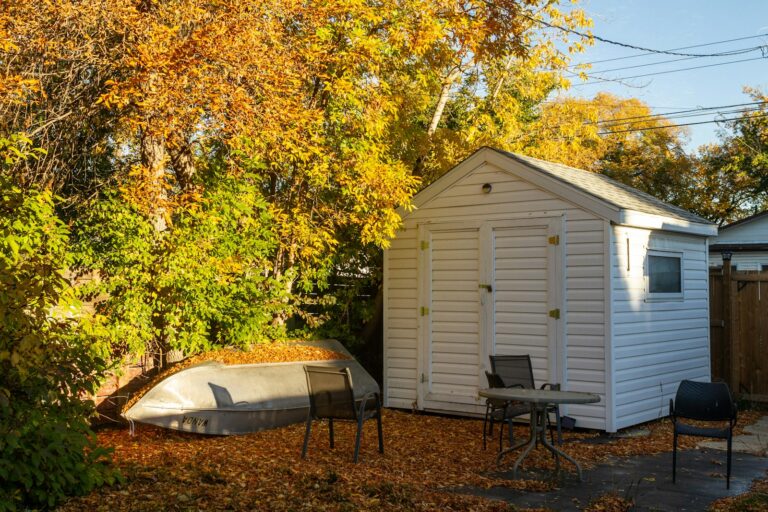
Running Power to a Shed: Your Three Options
If you are wondering how to add electricity to a shed, start with what you plan to run. A garden shed with one light needs far less than a shop with a table saw, an air compressor and a window unit. That list decides the wire size, the breaker and whether you need a subpanel.
| Option | Good for | Limits |
|---|---|---|
| Outdoor rated extension cord | A short job, like running a drill for an afternoon | Temporary only. Unplug it and roll it up when you are done. |
| One 120 volt circuit from the house | Lights, a few outlets, battery chargers, a small fan | Not enough for heating, cooling or bigger tools, and no room to add circuits later |
| Feeder to a subpanel in the shed | Workshops, barns, window AC, heaters, 240 volt tools | Heavier wire, a disconnect and grounding at the shed, and more cost up front |
The Electrical Safety Foundation International (ESFI) calls extension cords a temporary solution and says plainly: “Do not substitute extension cords for permanent wiring.” ESFI also warns against running cords through walls, doorways, ceilings or floors, because a covered cord cannot release heat (ESFI).
If you want to heat or cool the shed, or expect to add more later, Family Handyman’s outdoor wiring guide says to plan for a subpanel instead of a single 20 amp circuit (Family Handyman).
How to Run Electricity From the House to a Shed
Here is how a typical underground job goes.
- Load and panel check. The electrician adds up what the shed will run and looks at your main panel. HomeGuide notes that homes with 200 amp service likely have enough capacity, while homes with smaller service typically need an upgrade first (HomeGuide). If your panel is full or undersized, see our electrical panel upgrade page.
- Route and wiring method. Choose PVC conduit, metal conduit or direct burial cable along the shortest practical path. HomeGuide points out that panel amperage and distance set the wire size, so a long run can need heavier wire.
- Permit. In Abilene, get the permit before any digging (details below).
- Call 811. Texas law requires you or your contractor to contact 811 two business days before you dig, not counting weekends and holidays, even in your own backyard, and the locate is free (Texas811). Texas811 also notes that public utilities may not mark lines that run from the meter onto private property (Texas811 FAQ), so tell your electrician about any private buried lines you know of.
- Trench and conduit. In a This Old House project, the electrician laid 1.5 inch PVC conduit on a bed of sand at least 18 inches deep for a 240 volt feed, with caution tape above it. Inside conduit, code calls for individual conductors rather than sheathed cable (This Old House).
- The shed end. Family Handyman notes that a shed needs a disconnect in a readily accessible spot near where the wires enter. Outlets get GFCI protection, and a feeder ends in a subpanel with its own grounding (more below).
How Deep Does Wire to a Shed Need to Be Buried?
Burial depth is measured from the surface to the top of the cable or conduit, and it depends on the wiring method. These yard minimums come from guides based on the 2023 and earlier editions of the NEC. Texas now uses the 2026 edition, so your inspector has the final word.
| Wiring method | Minimum cover in a yard | Source |
|---|---|---|
| Direct burial cable (UF) | 24 inches | St. Paul garage checklist (2023 NEC) |
| PVC conduit | 18 inches | St. Paul garage checklist (2023 NEC) |
| Rigid or intermediate metal conduit | 6 inches | St. Paul garage checklist (2023 NEC) |
| Residential 120 volt circuit, 20 amps or less, GFCI protected (for example UF cable) | 12 inches | Family Handyman; City of Llano guide |
Driveways and concrete have different requirements (Family Handyman), and where direct burial cable comes up out of the ground it has to be protected in conduit (St. Paul checklist).
How to Run Electricity to a Shed Above Ground
Above ground runs, such as an overhead line or protected conduit along a wall, cost less because there is no trench. HomeGuide’s table shows a 100 foot run at $1,000 to $2,500 underground versus $500 to $700 above ground, not counting wiring inside the shed. Angi, on the other hand, says running electricity to a shed above ground is generally not recommended and suggests underground conduit. If you are weighing both, ask for a price on each, and never staple an extension cord along a fence as a permanent fix.
Shed Subpanel: When You Need One
The code generally allows only one branch circuit or one feeder to a detached building, and a multiwire branch circuit counts as one (St. Paul checklist, 2023 NEC). So once a shed needs more than one circuit, the answer is a feeder to a subpanel. HomeGuide lists a subpanel at $500 to $1,700.
What sets a shed subpanel apart:
- A disconnect at the shed. A detached building needs a readily accessible disconnecting means, outside or just inside the building (St. Paul checklist).
- Four wires, not three. The feeder brings an equipment grounding conductor along with the hot wires and the neutral, and the neutral is not connected to the ground bar or the enclosure at the shed (EC&M Code Q&A, IAEI Magazine).
- Its own grounding electrode. A building fed by a feeder generally needs its own grounding electrode, such as ground rods, connected at the disconnect. Some single circuit setups are exempt, and the exceptions vary by code edition.
- GFCI protection. The 2023 NEC requires GFCI protection for receptacles in accessory buildings at dwellings and for outdoor receptacles (Mike Holt Enterprises). TDLR’s 2026 adoption includes a limited exception for certain outdoor outlets. If a shed outlet keeps tripping, see our GFCI troubleshooting guide.
This Old House shows what a mid size job looks like: a shed that needed 240 volts and 60 amps got 6 gauge wires, a 60 amp double pole breaker at the house, a separate ground rod outside the shed, and a subpanel with the neutral and ground kept separate. They listed it at 1 to 2 days and $4,000 to $5,000. If one big tool drives the upgrade, our post on dedicated circuits explains why it may need its own breaker, and the hot tub electrical requirements guide covers a similar 240 volt outdoor run.
Permits in Abilene and the Surrounding Towns
The City of Abilene building inspections FAQ says a storage building of 200 square feet or less needs no permit if it has no utilities, but a building of any size that has utilities does. Installing, altering, repairing or replacing electrical systems also needs a permit (City of Abilene).
A homeowner can get an electrical permit for work at their own house only after providing proof of homestead and passing a homeowner’s electrical test given by a City electrical inspector. Starting without a permit can bring a Stop Work Order, an investigation fee equal to the permit fee and a release fee. Building Inspections can be reached at 325-676-6273.
Outside Abilene city limits, around Tye, Merkel or Potosi for example, permit rules depend on where the property is, so check with your city hall or county before work starts. A barn far from the house means more trenching and heavier wire. HomeGuide lists a second meter at $1,400 to $4,700 plus a monthly fee, so if you are considering one, ask your utility (AEP Texas or Taylor Electric Cooperative) whether that is an option.
How Much Does It Cost to Run Electricity to a Shed?
Distance drives the price. HomeGuide (no update date shown, checked November 2026) gives these ranges for the line itself, not counting wiring inside the shed:
| Distance | Underground | Above ground |
|---|---|---|
| 50 feet | $500 to $1,250 | $250 to $350 |
| 100 feet | $1,000 to $2,500 | $500 to $700 |
| 150 feet | $1,500 to $3,800 | $750 to $2,300 |
| 200 feet | $2,000 to $5,000 | $1,000 to $3,000 |
| 300 feet | $3,000 to $7,500 | $1,500 to $4,500 |
HomeGuide also lists $10 to $25 per linear foot for an installed underground line, permits at $50 to $350, and $50 to $130 an hour for an electrician plus a $100 to $200 call out fee. With interior wiring, HomeGuide’s total range is $1,200 to $7,100. Angi’s 2024 figures line up: $1,000 to $3,800 for most jobs, about $2,500 on average, and as much as $7,000 with extensive interior work.
For local labor rates and what a service call usually includes, see how much an electrician costs in Abilene. We give free estimates and an upfront price that you approve before work starts.
When to Call an Electrician
This job touches your main panel, a trench near other buried lines and wiring that lives outdoors, so leave it to a licensed electrician. Call sooner if your current setup shows any of these signs.
| What you notice | What it can mean | What to do |
|---|---|---|
| The shed breaker trips when a tool or compressor starts | The circuit is too small for the load | Stop resetting it and have the load and wire size checked |
| A shed outlet trips its GFCI over and over | Moisture, a damaged cable or a faulty tool | Unplug everything, reset once, and call if it still trips |
| A cable is exposed on the ground or nicked by a mower | Damaged live wiring | Turn off its breaker and keep people and pets away |
| A warm or discolored outlet, or a burning smell in the shed | An overheating connection | Turn off the breaker if it is safe to reach and call. For smoke or fire, get out and call 911. |
Frequently Asked Questions
Do I need a permit to run electricity to a shed in Abilene?
Yes. The City of Abilene requires a permit for a shed or storage building of any size that has utilities, and for electrical installation work.
Can I run electricity to a shed myself?
In Abilene, only on your own homestead, and only after you pass the City’s homeowner electrical test and get a permit. This Old House rates the job hard and says powering an outbuilding is probably a job for a pro.
How much does it cost to run electricity to a shed?
Angi’s 2024 data puts most jobs at $1,000 to $3,800. Long runs, a subpanel and interior wiring push it higher.
Need Power Run to a Shed, Shop or Barn?
Call (325) 326-5306 for a free estimate. We look at what you want to run, check your panel, and give you an upfront price for the circuit or subpanel that you approve before work starts. Our licensed electricians work under a Texas electrical contractor license in Abilene and the nearby towns, including Dyess AFB, Tye, Merkel, Clyde, Potosi, Buffalo Gap and Tuscola. For new circuits and outdoor wiring, see our electrical installation services, and for 24/7 emergency calls, our emergency electrician page.