If an outlet sparks when plugging in a lamp, charger or vacuum, a tiny flash that is gone in an instant is usually normal. It happens because electricity starts flowing across the plug blades the moment they touch the metal contacts inside the outlet. Angi’s guide to sparking outlets (updated July 9, 2026) says a small spark when you plug in an appliance is typically normal, but a spark that persists, fizzles, looks white or yellow instead of blue, is large or comes with a burning smell means you should stop using that outlet and contact an electrician.
The National Fire Protection Association (NFPA) lists “sparks from an outlet” among the reasons to call a qualified electrician in its electrical safety tip sheet, and the U.S. Fire Administration estimated that about 24,000 residential building electrical fires were reported each year from 2014 to 2016.
Why an Outlet Sparks When Plugging In
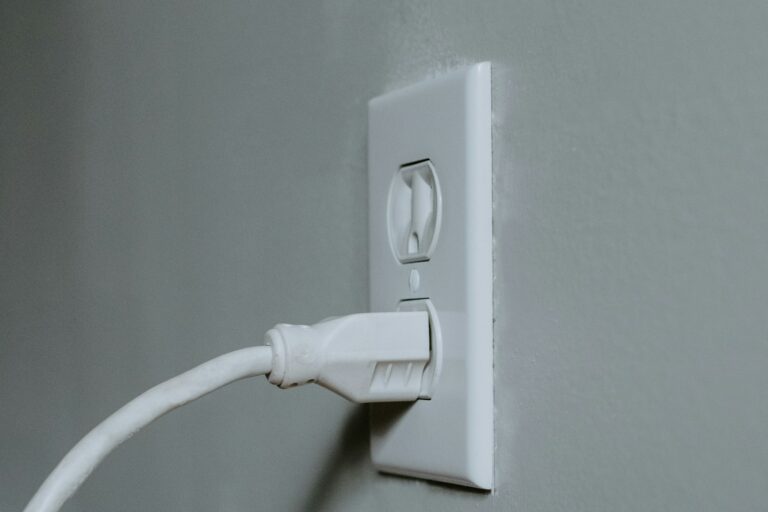
An outlet is a set of spring metal contacts connected to your home’s wiring. When a plug goes in, its blades touch those contacts and complete the circuit. If the device is already switched on, it starts drawing current at that exact moment, and for a split second the electricity can jump the tiny gap between blade and contact, which is the small spark you see.
The same thing happens in reverse when you pull a plug out. The U.S. Consumer Product Safety Commission’s (CPSC) Guide to Home Wiring Hazards explains that sparking when you remove a plug “usually means that there is electrical current flowing through the plug when you remove it.” Its advice is to turn appliances off with their own switch before unplugging them, and not to use the plug as an on and off switch, because that can damage both the plug and the outlet.
A spark becomes a problem when something else is behind it, such as a loose connection, worn contacts, damaged wiring, moisture or an overloaded circuit.
Normal Spark or Warning Sign?
Use this table to sort out what you saw. When in doubt, treat it as a warning sign.
| What you notice | What it likely means | What to do |
|---|---|---|
| A tiny, quick spark the moment you plug in or unplug, then nothing | Normal: current starting or stopping as the blades meet the contacts | Keep using the outlet. Switch devices off before you plug them in or unplug them. |
| A spark that keeps going, fizzles or crackles, or looks large, white or yellow | A possible short circuit, loose connection or worn part | Stop using the outlet. Turn off its breaker if you can do it safely and call an electrician. |
| A burning or rubbery smell, smoke, or black or brown marks on the outlet or plug | Overheating at the outlet, the plug or the wiring | Turn off the breaker. If there is smoke or fire, get everyone out and call 911. |
| The cover plate feels hot or uncomfortable to touch | The CPSC calls this a potential fire hazard in the outlet, switch or wiring | Stop using it right away and have a qualified electrician check it as soon as possible. |
| The plug wobbles, slips out easily or sparks when it moves | A loose connection that is likely to overheat | Try other plugs (see below). Replace a worn cord, or have the outlet replaced. |
| A spark or pop, and then the outlet goes dead | A breaker or GFCI has probably tripped because of a fault | Unplug the device and reset the breaker or GFCI once. If it trips again, call an electrician. |
Common Causes of a Sparking Outlet
- Loose plugs and worn outlets. The CPSC says a plug that slips in and out easily or pulls out from the weight of its cord may have a loose connection that is likely to overheat. Try plugs from two or three other cords: if they fit firmly, the first cord is worn out, and if most fit loosely, the outlet probably needs to be replaced by a qualified electrician. Do not bend plug blades to make them fit tighter; the CPSC warns this usually causes worse overheating later.
- Loose or damaged wiring. Angi lists loose wiring and frayed wires among the causes of arcing at an outlet. The CPSC adds that aluminum wires connected to outlets and switches tend to loosen, lose good contact and overheat. If your home has older wiring, our guide to types of wiring in old houses explains what to look for.
- Short circuits. According to Angi, a short circuit lets current race along a path where it does not belong, and it can come from old appliances, loose connections, punctured wiring or moisture. If a breaker trips again and again, read why your breaker keeps tripping.
- Overloaded circuits. The CPSC describes overloading as appliances and lights regularly demanding more current than the circuit can safely deliver. Space heaters are one appliance to watch in winter; our space heater safety guide explains how to plug them in safely.
- Moisture. ESFI’s guidance on water-damaged electrical equipment lists receptacles, switches, GFCIs and AFCIs among the items that must be replaced after water exposure, and recommends that qualified electricians evaluate water-damaged equipment. For wet areas, see our guide to a GFCI outlet that keeps tripping.
- Damaged cords and appliances. The CPSC says to stop using an appliance whose cord shows damage at the plug until the cord or plug is replaced.
What to Do When an Outlet Sparks
If it was one tiny spark and nothing looks, feels or smells wrong, keep using the outlet. For anything more:
- Smoke or flames? Get everyone out and call 911.
- Do not touch a sparking, hot or wet outlet or plug. Go to your electrical panel and switch off the breaker for that circuit. Our guide on how to reset a breaker shows how to find the right one. If you cannot tell which breaker it is, the main breaker turns off power to the whole house.
- Unplug the device once the power is off. Pull on the plug body, not the cord, as the CPSC advises.
- Look, but do not open anything. Check for black or brown marks, melted plastic or a damaged cord. Leave the cover plate on. What is behind it is a job for a licensed electrician.
- Keep the circuit off until it has been checked, and do not plug the same device in somewhere else if its cord or plug is damaged.
How to Prevent Outlet Sparks
- Switch it off first. Turn appliances off with their own switch before you plug them in or pull them out, so current is not flowing through the plug as it connects or disconnects. Then pull on the plug, not the cord.
- Never force a plug. ESFI’s extension cord safety tips say never to force a plug into an outlet if it does not fit and never to cut off the ground pin to make a plug fit.
- Use extension cords for short-term use only. The CPSC says extension cords are intended only for short-term use. If you depend on them every day, have permanent outlets added; our electrical installations page covers new outlets and circuits.
- Ask about AFCI protection. ESFI’s Q and A on arc-fault circuit interrupters describes AFCIs as devices that replace standard circuit breakers in your panel and use electronics to “detect hazardous arcing conditions and shut down the electricity.” An electrician can tell you whether your panel has them.
When to Call an Electrician
Call a licensed electrician if an outlet sparks with more than a tiny flash, sparks repeatedly, feels hot, shows scorch marks or smells like burning. ESFI’s home wiring safety page lists arcs and sparks, sizzling or buzzing sounds, the smell of hot insulation, and switch plates or outlet covers that are hot or discolored among the signs that call for a licensed electrician to inspect your wiring. Our outlet and switch repair page covers this work. If a plug feels warm rather than sparking, read is it dangerous if a plug gets warm.
Cost. Angi’s guide (updated July 9, 2026) says sparking-related outlet repairs typically cost $100 to $350 per outlet, while general outlet repairs run $60 to $250 with an average of $130. These are national figures, not Abilene quotes. Our guide to electrician costs explains how labor and permits add up. We offer free estimates, and with upfront pricing you approve the price before any work starts.
Sparks outside at the meter or power line. The CPSC says not to try to fix sparking in the electric service equipment yourself or touch any of it, and to call the electric power company immediately. AEP Texas lists 1-866-223-8508 on its report an outage page and warns never to go near or touch a power line. Taylor Electric Cooperative members can call (325) 793-8500, the number the co-op lists to report an outage. If anything is burning, call 911 first.
Frequently Asked Questions
Is it normal for an outlet to spark when you plug something in?
A tiny, quick spark the moment the plug goes in is usually normal. A spark that lasts, crackles, looks large, white or yellow, or comes with a burning smell is not normal.
Why does my outlet spark when I unplug something?
Current is still flowing through the plug as you pull it out. Switch the appliance off first and pull on the plug, not the cord. If the cover plate feels hot, have an electrician check it.
Can a sparking outlet cause a fire?
The wrong kind can. Angi says a small spark when you first plug something in is typically normal, but sparks caused by loose connections, damaged wiring or overheating are a warning: ESFI lists arcs and sparks among the warning signs of a wiring problem, and the CPSC calls an outlet with a hot cover plate a potential fire hazard.
My outlet sparked and now it does not work. What happened?
Often a breaker or a GFCI outlet has tripped. Unplug the device, then check your panel and any GFCI outlets nearby. If the power trips again or the outlet still does not work, call an electrician. The CPSC notes that an outlet that stops working can be a warning sign of a more serious problem. Our guide on what to do when an outlet stops working walks through the checks.
Sparking Outlet in Abilene?
If an outlet in your home keeps sparking, feels hot or stopped working after a spark, call (325) 326-5306 or use our contact page. Our licensed electricians work under a Texas electrical contractor license, we take 24/7 emergency electrician calls, and we work in Abilene and the nearby towns, including Dyess AFB, Tye, Merkel, Clyde, Potosi, Buffalo Gap and Tuscola.